
CSR and Brand Image: A Research Proposal on the Tata Group
A masters research proposal sample on the CSR effect on brand image, studied through the Tata Group in India. It sets out the research concept, background, rationale, aims and objectives, a literature review on CSR theory and Tata's programs, and a pragmatic mixed-methods methodology with ethics, limitations and a timeline.
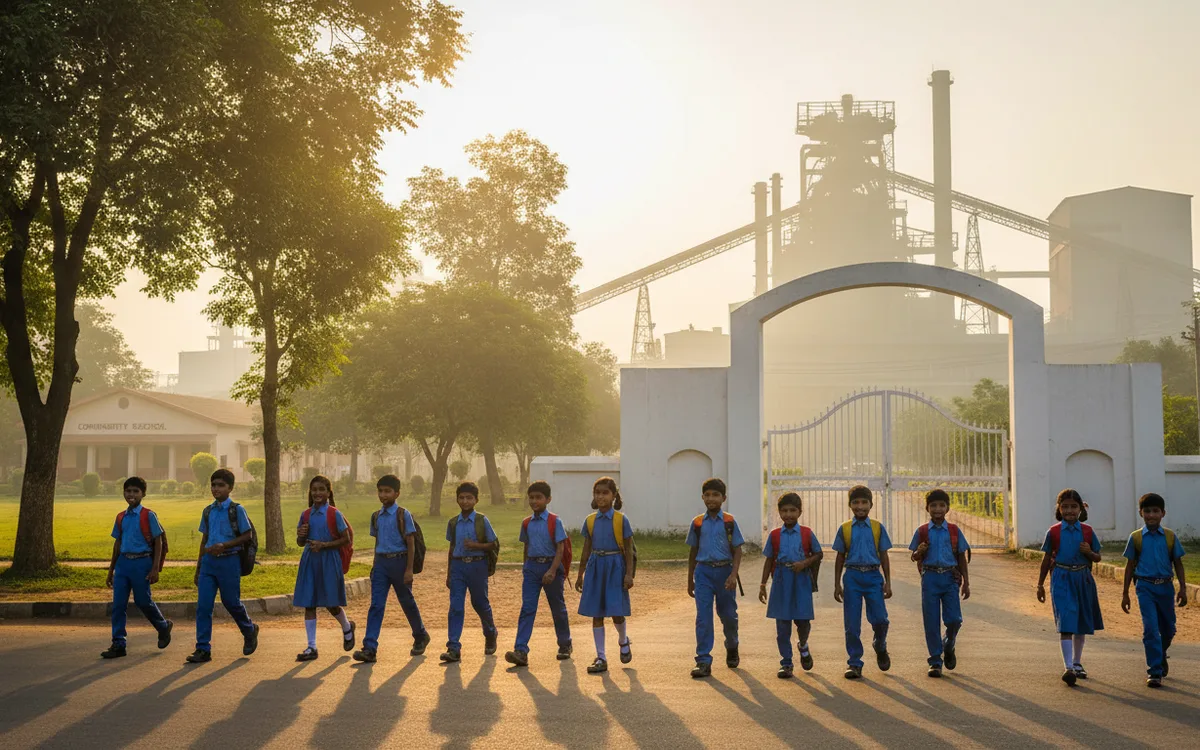
This is a masters research proposal sample on the effect of corporate social responsibility on brand image, using the Tata Group in India as the case. It was written for a business research methods module and follows the standard proposal structure: introduction, literature review, methodology, summary, references and timeline. Harvard referencing. The proposal was written in 2022. Sources dated 2024 were added for the spending figures and the league table; the design and the timeline are the original.
How Does CSR Affect Brand Image?
CSR affects brand image through association. Consistent, visible action on communities, employees and the environment attaches those attributes to the brand in a customer’s mind. The effect is strongest when the activity is close to what the company actually does, and it reverses quickly when the claims outrun the practice.
That is the proposition this proposal sets out to test at the Tata Group, which is a useful case because its community work predates the modern language of CSR and because India made CSR spending a statutory obligation for large companies under section 135 of the Companies Act 2013. The measurement problem is the interesting part: brand image is a perception, so the research has to reach people who hold it rather than read it off a report.
How Do You Write a Research Proposal on CSR?
Narrow the question to one company and one outcome, because CSR is too broad to study whole. Use a named theory, such as Carroll’s pyramid, so the analysis has a frame. Choose a method that can reach real respondents in the time available. Be explicit about ethics, because CSR research usually involves employees or customers.
The proposal below does each of those in turn, and the order it uses is the order most UK business schools expect. If you want a second worked proposal to compare against, read our example of a research proposal, which is the fullest one on this site, and how to write a dissertation proposal for the section-by-section guidance. More proposals and dissertations are in the dissertation samples archive.
Proposal title: An investigation into the effect of CSR on the brand image of the Tata Group. The sample runs from here to the timeline in the appendix, with its own section numbering and reference list.
What Does the Proposal Set Out to Investigate?
It asks whether the Tata Group’s CSR activity changes how the brand is perceived in India, and if so which activities do the work. The introduction below sets out the concept, the background, the rationale for studying CSR in an Indian context, one aim, three objectives and three matching research questions.
1. Introduction
1.1 Concept of the Research
This research examines how effective CSR is in shaping the brand image of the Tata Group in India. The group describes its community work as serving marginalized communities in four areas: education, health, empowerment and environment (Tata.com, n.d.). The dissertation will take the individual programs in turn and ask which of them, if any, reaches the people who form an impression of the brand.
If you need a research proposal written or reviewed, our dissertation and thesis help page explains how we work.
1.2 Research Background
Tata’s community work is structured differently from that of most Indian groups. About 66% of the equity of Tata Sons, the holding company, is held by the Tata Trusts, and the dividends flow directly to the Trusts’ philanthropic work (Tata.com, n.d.). On top of that, each operating company carries its own statutory CSR obligation under section 135 of the Companies Act 2013. The group site names the four themes given in 1.1, while the Tata Sustainability Group’s site grouped its CSR into five program areas in 2022: education and holistic development, livelihoods and skill development, rural development, water and sanitation, and healthcare. The group also reports 1.52 million hours of employee volunteering in the 2020 financial year (Tata.com, n.d.). That is the scale the study starts from, and the question is whether activity of that size registers with customers at all.
Also read our sample research proposal for business research methods, which uses the same section order on a different topic.
1.3 Research Rationale
CSR in India faces obstacles that do not appear in the Western literature, and they are the reason a country-specific study is worth doing. Communities often lack the information needed to judge what a program is worth, so participation is weak (Kumar, 2019; Ijariie.com, 2016). Suitable delivery partners are not always available, so funds are committed faster than they can be spent well. Tata is a useful case in that setting because it works through established partnerships with non-governmental and government organizations rather than running everything in house, and because delivery sits with the operating companies. The figure below shows how one of them, Tata Motors, reports its own program: 7.5 lakh people reached in the 2021 financial year across health, education, employability and environment (Tatamotors.com, 2021). That company level is where CSR is delivered and where a customer is most likely to meet it.
How Tata Motors reports its four CSR focus areas, FY2020-21
| Point of comparison | Reach | Outcome reported |
|---|---|---|
| Health | Reach 3.8 lakh people | Outcome reported 60% of the undernourished children it worked with are now healthy |
| Education | Reach 1.2 lakh students | Outcome reported 70% of the students who cleared JEE Advanced got into IITs |
| Employability | Reach 0.18 lakh youth and women | Outcome reported 68% of those trained are now in work |
| Environment | Reach 0.91 lakh people in awareness programmes | Outcome reported 1.1 lakh saplings planted, with an 80% survival rate |
Taneja et al. (2021) add a regulatory explanation. Interviewing regulators and central public sector enterprises, they find that several government ministries each require CSR reports in their own format, leaving the enterprises “overburdened with myriad reporting requirements” that weaken both their resources and the quality of the CSR work, and unable to assess the actual impact of what they fund. Their sample is state-owned rather than private, but the risk they name, CSR that follows the letter of the law by a tick-box approach rather than its spirit, is the one a brand-image study has to look for. Supplier relations and a tightening labor market change what Indian companies spend their CSR budgets on from year to year. This research is needed to identify which of those pressures actually shows up in how a brand is seen.
Geographical bias is a further issue: most companies in India, Tata included, run their CSR programs close to their own operations, so the benefit concentrates where the plants are. The commercial reason a group of this size treats the work as more than compliance is consumer expectation. In the 2015 Cone Communications/Ebiquity study of close to 10,000 consumers in nine countries, India among them, nine in ten expected companies to operate responsibly on social and environmental issues as well as make a profit (Sustainable Brands, 2015).
1.4 Aims and Objectives of the Research
The research will aim to analyze the effectiveness of CSR on the brand image of the Tata Group in India.
The objectives of the research are:
- To identify the brand image of the Tata Group and the CSR challenges in India
- To explain the strategies of CSR for enhancing the brand reputation of the Tata Group
- To evaluate the challenges of the Tata Group and their possible mitigation by CSR
1.5 Research Question
- What are the strategies of CSR for enhancing the brand image?
- What are the CSR challenges of the Tata Group in India?
- How can the brand image be affected by CSR activities that are irrelevant to what the Tata Group does?
What Does the Literature Say About CSR and Brand Image?
That CSR builds customer loyalty and trust, and that loyalty is one of the components of brand image. The review below defines both concepts, applies Carroll’s pyramid, sets out why CSR is compulsory for large Indian companies, and ends with the gap: almost nothing published looks at Tata’s brand image after Covid-19.
2. Literature Review
2.1 Concept of CSR
CSR is a management concept holding that a company carries obligations to the society and environment around it alongside its economic ones. Carroll and Laasch (2020) treat the balance between the two as a question of responsible management rather than a separate activity bolted onto the business, which is the framing this proposal adopts. Okafor, Adeleye and Adusei (2021) test the commercial half of that claim on US technology firms and relate CSR to financial performance, and Huo et al. (2021) approach it from the risk side, arguing that CSR principles reduce exposures a company would otherwise carry internally. Taken together, the literature offers three returns a company can expect: a stronger company reputation, savings in operational costs and an improved brand image.
2.2 Concept of Brand Image
Brand image is the customer's perception of a brand: the aggregate of the ideas, impressions and beliefs they hold about it. It matters commercially because it is one of the few competitive advantages a rival cannot buy directly. This proposal breaks it into four components: brand identity, consistency, brand loyalty and a unique service pattern. CSR acts on the third of those first. It raises customer satisfaction and attachment, and loyalty is the component through which that attachment reaches the brand as a whole, which is why the research questions in 1.5 ask about activities rather than about spending totals.
2.3 the Necessity of CSR Policies in the Tata Business
Inside India, maintaining CSR policies is a statutory condition rather than a choice for a company of Tata’s size. Section 135 of the Companies Act 2013 applies to any company with a net worth of INR 500 crore or more, turnover of INR 1,000 crore or more, or net profit of INR 5 crore or more in a financial year, and requires it to spend at least 2% of its average net profit over the three preceding years on CSR (Companies Act 2013, s.135). Every large Tata operating company crosses at least one of those thresholds. Applying CSR principles inside the business of Tata is therefore expected to produce a positive social response alongside profit growth, and to widen the group’s ability to attract consumers.
Total CSR spending filed with the Ministry of Corporate Affairs, FY2019 to FY2022
Chart data
| Item | Value (crore INR) |
|---|---|
| FY2019 | 23,206.63 crore INR |
| FY2020 | 23,975.46 crore INR |
| FY2021 | 26,210.96 crore INR |
| FY2022 | 26,278.73 crore INR |
The scale of the obligation is visible in the filings companies make to the Ministry of Corporate Affairs. Its CSR portal records total spending of INR 23,206.63 crore in the 2019 financial year, 23,975.46 crore in 2020, 26,210.96 crore in 2021 and 26,278.73 crore in 2022 (The CSR Universe, 2024). Two things follow for this study. Spending did not fall in the pandemic year once the filings were complete, so the question is no longer whether large Indian companies spend. And the series has to be read at the right date: in November 2021 the ministry told the Lok Sabha that 1,619 companies had so far reported INR 8,828.11 crore for the 2021 financial year (India CSR, 2021), a figure that produced newspaper headlines of a 64% fall before the remaining filings arrived and took the year above the one before it.
2.4 Application of “Corporate Social Responsibility Theory” (CSR)
Carroll’s pyramid of corporate social responsibility gives this study its frame. It puts four responsibilities in order: economic (be profitable), legal (obey the law), ethical (act fairly beyond what the law compels) and philanthropic (contribute resources to the community). The order is the argument, because the upper levels rest on the lower ones rather than substituting for them (Carroll and Laasch, 2020). Huo et al. (2021) apply the same four levels to corporate conduct during a public health crisis, which is the closest published use of the model to the post-Covid context of this proposal.
Applied to the Tata Group, the four levels separate activities that group reporting tends to present together. Statutory CSR spending in India sits at the legal level. The community programs in education, livelihoods, water and healthcare sit at the ethical and philanthropic levels. All of them rest on the trading performance of the operating companies. The research questions in section 1.5 ask which of these levels a customer actually notices when forming an impression of the brand.
2.5 Impact of CSR Principles on the Business of Tata
Tanimoto (2019) warns against reading spending as credibility. Multi-stakeholder initiatives, he finds, do not automatically ensure good CSR performance; they help only where the market has external monitoring and evaluation systems and where the company builds the standards into its own management processes. That warning matters for a group of Tata’s structure, whose companies sit near the top of the Indian league table for reported CSR spending. In the 2023 financial year Tata Consultancy Services spent INR 774 crore and Tata Steel INR 475 crore, second and fifth among all Indian companies, behind only HDFC Bank at 803 crore (India CSR, 2024). If CSR spending changes brand image anywhere in India, it should be visible here first. That position is the starting point rather than the finding of this study, because spending is an input and brand image is an outcome.
Ten largest corporate CSR spenders in India, FY2023
Chart data
| Item | Value (crore INR) |
|---|---|
| HDFC Bank | 803 crore INR |
| Tata Consultancy Services | 774 crore INR |
| Reliance Industries | 743 crore INR |
| ICICI Bank | 477 crore INR |
| Tata Steel | 475 crore INR |
| ONGC | 454 crore INR |
| Infosys | 390 crore INR |
| ITC | 323 crore INR |
| NTPC | 320 crore INR |
| Power Grid Corporation | 311 crore INR |
2.6 Probable Solutions to Achieve CSR Policies
Any organization has to balance its CSR activities against profit growth. Senior management should start with the environmental policies, making them clear and specific rather than aspirational (Latapí Agudelo et al., 2019). Biodegradable and eco-friendly raw materials are the first practical lever in a production process, and the wider policy context matters as well, since air quality in India is treated as a problem of policy, finance and community action together rather than of corporate conduct alone (Orfonline.org, 2020). Reducing the carbon footprint of production is the example of strategic CSR application in the business of Tata that the group itself reports (Tatapower.com, 2021).
The pandemic is the reason that balance became hard to hold. In the first quarter of the 2021 financial year, April to June 2020, India’s GDP contracted by 23.9% and gross value added by 22.8% against the same quarter a year earlier (MoSPI, 2020); manufacturing output fell 39.3% and construction 50.3% (Business Today, 2020). Financial stability is therefore a precondition of CSR rather than a separate goal, and a study of CSR conducted after 2020 has to treat the funding of these programs as a variable rather than a constant.
2.7 Literature Gap
The peer-reviewed literature on CSR in India is large, but little of it measures the effect of CSR on the Tata Group’s brand image, and none of it examines the group after Covid-19. That absence is the gap this study addresses: it takes one group, one outcome and the period after the pandemic.
Which Research Methods Does the Proposal Use?
A pragmatic philosophy with a mixed-methods design: a survey and interviews with Tata managers for primary data, journals and company reporting for secondary data, Excel for the quantitative analysis and thematic analysis for the qualitative. Positivism and interpretivism are both considered and rejected, and the reasons are given in 3.1.
3. Methodology
3.1 Research Philosophy
A pragmatic research philosophy will be used here to meet the objectives of the study. The research will be completed using both secondary and primary methods, so the philosophy has to be one that allows the two to be read together rather than one that rules either out. Pragmatism suits research that sets out to solve a practical problem instead of testing a single theory, and it is the philosophy normally used where a mixed-methods design is chosen (Allmark and Machaczek, 2018). Positivism and interpretivism are both rejected here. A purely positivist design would need data more accurate and complete than this study can reach, and a purely interpretivist design would discard the numerical data the survey is designed to produce.
3.2 Research Strategy
Quantitative and qualitative strands run together, each answering a different research question. The quantitative strand measures how far CSR activity is associated with perceptions of the brand. The qualitative strand asks Tata managers which programs they believe reach customers and why, which is the part a survey cannot supply (Ahmad et al., 2019). Neither strand answers the whole question alone, which is the practical reason for the pragmatic philosophy chosen in 3.1.
3.3 Data Collection Method
Primary data will come from interviews with managers inside the group, who are the target population because they can speak to both the program and its intended audience. Secondary data will come from peer-reviewed journals, industry articles and the group's own CSR reporting, which together establish what the group says it does and what independent sources record. No fabricated or illustrative data will be used, as a condition of the research ethics set out in 3.5.
3.4 Data Analysis Method
Quantitative responses will be analyzed in Microsoft Excel and presented as charts and tables, which is sufficient for the descriptive comparisons this study needs (Ahmad et al., 2019). Qualitative interview material will be analyzed thematically: transcripts coded, codes grouped into themes, and themes tested against the three research questions in 1.5 rather than reported on their own.
3.5 Ethical Consideration
Participation will be voluntary and informed, responses will be reported so that no individual manager is identifiable, and no data will be altered to fit the expected result. The Data Protection Act 2018 applies throughout, and it requires personal data to be used fairly, lawfully and transparently (Gov.uk, 2018). Ethics approval has to be obtained before any participant is approached, which places it after planning and before the interviews.
3.6 Research Limitation
Three limitations are known at the outset. Primary data collection is slow and expensive, so the sample will be smaller than the group's size would justify. If too few managers agree to take part, the results will describe the people who answered rather than the group. And managers are not customers: they can report what the group intends its CSR to achieve, which is not evidence of what customers perceive. A study with more time would add a customer survey to close that gap.
Also read AI in supply chain management, a poster-making assignment on a different applied research question.
3.7 Timeline
The research timeline for this proposal is in the appendix below.
What Does the Proposal Conclude?
That the question is answerable with the design set out above. The summary restates the topic, names Carroll’s pyramid as the theory applied, and confirms that both primary and secondary data will be collected. Being a proposal, it reports no findings: the objectives are stated as work to be done, not as work completed.
4. Summary
This proposal has described the research topic and the CSR policies inside Tata that it will analyze. The analysis will be critical rather than descriptive, framed by corporate social responsibility theory and specifically Carroll’s pyramid (Latapí Agudelo et al., 2019). With the methodology set out in section 3, the research can proceed. Both primary and secondary methods will be used for data collection, and no results are claimed at this stage.
Appendix: Research Timeline
The student’s Gantt chart for section 3.7 is redrawn below in weeks. It runs for 60 working days, from 21 June to 9 September 2022, in four blocks: initiation (team, aim, objectives), planning (framework and secondary documentation), execution (interviews and secondary data collection) and monitoring (analysis, recommendations and closure). One stage is missing. Section 3.5 says ethics approval must be obtained before any participant is approached, and the chart has no such stage between planning and the interviews. A marker will look for it there.
Research timeline of the proposal, 12 weeks from 21 June 2022
-
Team development
Weeks 1–2
Initiation, 7 working days from 21 June.
-
Preparing aim
Weeks 2–3
3 days from 30 June.
-
Preparing objectives
Week 3
2 days from 5 July.
-
Formulating framework
Weeks 3–4
Planning, 8 days from 5 July.
-
Secondary documentation
Weeks 4–6
10 days from 15 July.
-
Data collection interviews
Weeks 6–8
Execution, 10 days from 29 July.
-
Secondary data collection
Weeks 8–12
22 days from 12 August.
-
Data analysis
Weeks 8–11
Monitoring, 16 days from 12 August.
-
Recommendations
Week 12
4 days from 5 September.
-
Project closure
Week 12
9 September 2022.
Timeline data
| Phase | Start (week) | End (week) |
|---|---|---|
| Team development | 1 | 2 |
| Preparing aim | 2 | 3 |
| Preparing objectives | 3 | 3 |
| Formulating framework | 3 | 4 |
| Secondary documentation | 4 | 6 |
| Data collection interviews | 6 | 8 |
| Secondary data collection | 8 | 12 |
| Data analysis | 8 | 11 |
| Recommendations | 12 | 12 |
| Project closure | 12 | 12 |
Need a research proposal on CSR, sustainability or brand management? Message us on WhatsApp with the title, the word count and the submission date.
Sources
The first list is the proposal’s own reference list. The second lists the works cited on this page outside the proposal.
Reference List of the Proposal
- Ahmad, S., Wasim, S., Irfan, S., Gogoi, S., Srivastava, A. and Farheen, Z., 2019. Qualitative v/s. quantitative research: a summarized review. Journal of Evidence Based Medicine and Healthcare, 6(43), pp.2828-2832. doi:10.18410/jebmh/2019/587. https://journals.indexcopernicus.com/api/file/viewByFileId/916903.pdf [Retrieved on: 24.09.2026]
- Allmark, P. and Machaczek, K., 2018. Realism and pragmatism in a mixed methods study. Journal of Advanced Nursing, 74(6), pp.1301-1309. https://doi.org/10.1111/jan.13523
- Business Today, 2020. India’s GDP contracts 23.9% in Q1; construction, manufacturing, trade bear the brunt. https://www.businesstoday.in/latest/economy-politics/story/india-q1-gdp-contracts-by-239pc-construction-manufacturing-trade-hotels-transport-key-affected-sectors-271664-2020-08-31 [Retrieved on: 24.09.2026]
- Carroll, A.B. and Laasch, O., 2020. From managerial responsibility to CSR and back to responsible management. In Research Handbook of Responsible Management (pp. 84-90). Edward Elgar Publishing.
- Companies Act 2013, s.135. Corporate Social Responsibility. https://ca2013.com/135-corporate-social-responsibility/ [Retrieved on: 24.09.2026]
- Gov.uk, 2018. Data protection. https://www.gov.uk/data-protection
- Huo, C., Dar, A.A., Nawaz, A., Hameed, J., Pan, B. and Wang, C., 2021. Groundwater contamination with the threat of COVID-19: insights into CSR theory of Carroll's pyramid. Journal of King Saud University - Science, 33(2), 101295.
- Ijariie.com, 2016. CSR: issues and challenges in India. https://ijariie.com/AdminUploadPdf/CSR___ISSUES_AND_CHALLENGES_IN_INDIA_ijariie6294.pdf [Retrieved on: 10.06.2022]
- India CSR, 2021. India’s CSR spend declines sharply to Rs 8,828 Cr in FY’20-21: Govt. https://indiacsr.in/indias-csr-spend-declines-sharply-to-rs-8828-cr-in-fy20-21-govt/ [Retrieved on: 24.09.2026]
- India CSR, 2024. Top 10 companies invest Rs 24,180 Cr in CSR activities over five years: report. https://indiacsr.in/top-10-companies-invest-rs-24180-cr-in-csr-activities-over-five-years-report/ [Retrieved on: 24.09.2026]
- Kumar, N., 2019. Corporate social responsibility: an analysis of impact and challenges in India. International Journal of Social Sciences Management and Entrepreneurship, 3(2). https://www.sagepublishers.com/index.php/ijssme/article/view/50 [Retrieved on: 10.06.2022]
- Latapí Agudelo, M.A., Jóhannsdóttir, L. and Davídsdóttir, B., 2019. A literature review of the history and evolution of corporate social responsibility. International Journal of Corporate Social Responsibility, 4(1), pp.1-23. https://jcsr.springeropen.com/articles/10.1186/s40991-018-0039-y
- MoSPI, 2020. Estimates of Gross Domestic Product for the first quarter (April-June) of 2020-21. Press note, 31 August 2020. Ministry of Statistics and Programme Implementation. https://www.mospi.gov.in/sites/default/files/press_release/PRESS_NOTE-Q1_2020-21.pdf [Retrieved on: 24.09.2026]
- Okafor, A., Adeleye, B.N. and Adusei, M., 2021. Corporate social responsibility and financial performance: evidence from US tech firms. Journal of Cleaner Production, 292, 126078.
- Orfonline.org, 2020. Finding solutions to air pollution in India: the role of policy, finance, and communities. https://www.orfonline.org/research/finding-solutions-to-air-pollution-in-india-the-role-of-policy-finance-and-communities-74311/ [Retrieved on: 10.06.2022]
- Sustainable Brands, 2015. Study: 81% of consumers say they will make personal sacrifices to address social, environmental issues. Reporting the 2015 Cone Communications/Ebiquity Global CSR Study. https://sustainablebrands.com/read/study-81-of-consumers-say-they-will-make-personal-sacrifices-to-address-social-environmental-issues [Retrieved on: 24.09.2026]
- Taneja, P., Jain, A., Joshi, M. and Kansal, M., 2021. Mandatory corporate social responsibility in India: reporting reality, issues and way forward. Meditari Accountancy Research. https://www.emerald.com/insight/content/doi/10.1108/MEDAR-11-2020-1063/full/html [Retrieved on: 10.06.2022]
- Tanimoto, K., 2019. Do multi-stakeholder initiatives make for better CSR? Corporate Governance: The International Journal of Business in Society, 19(4), pp.704-716. https://www.emerald.com/insight/content/doi/10.1108/CG-08-2018-0267/full/html [Retrieved on: 10.06.2022]
- Tata.com, n.d. Community. https://www.tata.com/community [Retrieved on: 24.09.2026]
- Tatamotors.com, 2021. Tata Motors releases 7th annual CSR report for FY 2021. https://www.tatamotors.com/press/tata-motors-releases-7th-annual-csr-report-for-fy-2021/ [Retrieved on: 10.06.2022]
- Tatapower.com, 2021. Tata Power set to reduce emissions in alignment with Science Based Targets initiative (SBTi). https://www.tatapower.com/media/PressReleaseDetails/1871/tata-power-set-to-reduce-emissions-in-alignment-with-science-based-targets-initiative [Retrieved on: 10.06.2022]
- Tatasustainability.com, 2022. CSR. https://www.tatasustainability.com/ [Retrieved on: 10.06.2022; the CSR page has since been withdrawn from the site]
- The CSR Universe, 2024. CSR expenditure in India hits 26,278 Cr: over 60% allocated to health, education and environment in 2021-22. https://thecsruniverse.com/articles/csr-expenditure-in-india-hits-26278-cr-over-60-allocated-to-health-education-and-environment-in-2021-22 [Retrieved on: 24.09.2026]
Sources for the Editorial Sections
- Companies Act 2013, s.135, Corporate Social Responsibility. ca2013.com. The statutory obligation named in the first answer and in the FAQ.
- Tata.com, Community. tata.com. The Tata Trusts’ shareholding and the four focus areas quoted in the FAQ.
- Tanimoto, K. (2019) ‘Do multi-stakeholder initiatives make for better CSR?’, Corporate Governance, 19(4), pp. 704-716. emerald.com. The finding restated in section 2.5.
- Assignment Helper (2026) CSR in small businesses: challenges and opportunities and Milton Friedman’s shareholder theory on corporate social responsibility.
Frequently Asked Questions
How does CSR affect brand image?
Through association. When a company acts consistently and visibly on communities, employees and the environment, customers attach those attributes to the brand. The effect is strongest when the activity sits close to the company's own business, and it reverses fast when the claims run ahead of the practice, which is why this proposal measures perception rather than spending.
What is the Tata Group's CSR program?
Tata says its community work serves marginalized communities in four areas: education, health, empowerment and environment. Two things make it unusual. About 66% of Tata Sons is owned by the Tata Trusts, so dividends fund philanthropy directly, and each operating company also carries its own statutory CSR obligation under section 135 of the Companies Act 2013.
How do you write a research proposal on CSR?
Pick one company and one outcome; CSR as a whole is too wide for a masters project. Frame the analysis with a named theory, Carroll's pyramid in this sample, so every finding has somewhere to sit. Choose a method that can reach real respondents in the time you have, and write the ethics section early, because CSR research almost always involves employees or customers.
What is pragmatism in research philosophy?
Pragmatism lets the research question decide the method, so quantitative and qualitative data can be combined in one study instead of one being ruled out on principle. It suits applied business research aimed at a practical problem. Section 3.1 of this proposal chooses pragmatism and says why positivism and interpretivism were both rejected.
What should a research proposal timeline include?
Every stage that has to finish before the next can start: literature search, proposal approval, ethics clearance, instrument design, data collection, analysis, writing and revision. Put ethics approval in explicitly, because it is the stage most likely to delay a project and the one students most often leave out.