Lego Marketing Strategy and Research Analysis
This MBA sample analyzes Lego's global marketing strategy. It covers the product portfolio and company capability, the economic, socio-cultural and competitive environment, market selection and target customers, four modes of market entry, the marketing mix, and five recommendations. The figures are 2020-21 unless a later source is cited.
This is a marketing assignment sample on Lego, written for a postgraduate global marketing module. It analyzes how the company manages marketing across national markets and cultures, using environmental analysis, market selection, four modes of market entry, the marketing mix and a five-year set of recommendations. The figures in the body are from 2020 and 2021 unless a later source is cited; a section near the end brings the financial picture up to the 2025 results.
If you have a similar brief, our MBA assignment help covers marketing strategy, market entry and the marketing mix, and you can read more MBA assignment samples before you ask.
Who Is Lego and What Does the Company Sell?
Lego is a Danish toy maker founded in 1932 by Ole Kirk Christiansen. Its central product is the interlocking plastic brick, sold in themed sets, and its products reach more than 120 countries. The Legoland parks carry its brand but are run by Merlin Entertainments under license; the LEGO Group itself bought the Discovery Centers from Merlin in February 2026.
Lego has established itself as one of the top toy manufacturers in the world, with the mission statement “Only the best is good enough." It was founded by a carpenter from Denmark, Ole Kirk Christiansen, with the philosophy that “good play” supplements a child’s life and his subsequent life. Based on this philosophy, Lego has developed and sold a wide range of products that aim at learning and development through play.
The oldest product that has been consistently at the center of Lego’s sales is the interlocking brick set that children can use to assemble buildings, architecture, vehicles, and other such things. These bricks come in a variety of different sets and themes. The company has maintained consistency in its quality globally and has gained a strong influence in the international market.
Globalization is transforming the strategies companies follow because it brings them into contact with different professional cultures and socio-cultural factors (Triandis, 2007). Lego has adapted to global business practices and marketing strategies, which have helped it sustain itself in the long run. While the product offering of Lego is unique, the company’s global success is also driven by its focus on marketing (Simon, 2017).
The following report analyzes and evaluates Lego’s global marketing strategy and shows how the organization manages its marketing operations across global markets and different cultures. It provides an overview of the company’s global strategies using environmental analysis, a brief marketing mix, and the product portfolio.
What Is in Lego’s Product Portfolio?
The report sorts the portfolio into four groups. Brick and themed sets are the cash cows and carry most of the revenue. The Discovery Centers are indoor family attractions that Merlin ran until the LEGO Group bought them in 2026. Mindstorms, the robotics range, was retired in 2022. Online games are the weakest group, co-owned with other brands.
Product Portfolio
The company has sold its toys for generations, and the children who once played with them are now even working for the company. With these years of legacy, the LEGO Group reported revenue of DKK 43.7 billion for 2020, up 13 percent on 2019, with net profit of DKK 9.9 billion (The LEGO Group, 2021a). Lego has been under pressure to change its general strategy and products in recent years due to digitalization and competition. However, the basic product and its design have essentially been unaltered. Lego provides toys in the form of multi-colored blocks and pieces that can be used by children to construct structures and thematic designs.
The Lego brick sets and thematic products are among the cash cows of the company and contribute to the majority of sales, and even with low market growth, the company has a major share in these products. Apart from the bricks, the company produces thematic toys like cars and action figures compatible with the brick set. These comprise the majority of the company’s earnings (Anon., 2021).
The Legoland Discovery Centers are indoor family attractions built around Lego brick models, smaller than the Legoland theme parks. When this report was written they were owned and run by Merlin Entertainments, which still operates the eleven Legoland resorts under a long-term license from the LEGO Group. In February 2026 the LEGO Group completed the purchase of the 29 Discovery Centers in nine countries from Merlin, with around five million visitors a year, and now runs them alongside its own retail stores (The LEGO Group, 2026b). Mindstorms was the robotics range. Name the generation carefully if you quote it: NXT arrived in 2006 and was superseded by EV3 in 2013, and the set on sale when Lego retired the brand was 51515 Robot Inventor, discontinued at the end of 2022 along with the Mindstorms name (Brickset, 2022).
Apart from these products, Lego also produces online games that attract children as well as adults. These are not high-income assets and are co-owned by several large brands. Lego needs to work more on the research and development of online games in order to penetrate the online gaming market.
Company Capability
Brand Image
Lego’s brand image is linked to product quality and to the safe learning and growth of children, and it travels across cultures better than any single product does. The measurable form of that image is brand value: Brand Finance ranked Lego the world's most valuable toy brand in 2020 at US$6.6 billion, "by a long way" ahead of the next brand even after a 3% fall in the pandemic year (Brand Finance, 2020). That standing is what lets the company enter a new market with trust already in place.
Marketing
The company’s marketing divides into two periods. Before digitalization it relied on store campaigns, magazine advertisements, television and comics. Since then it has added digital channels without dropping the traditional ones, and it has built a retail estate of its own: 678 Lego-branded stores worldwide at the end of 2020, 134 of them opened that year, 91 in China (The LEGO Group, 2021a). Stores, LEGO.com and, since 2026, the Discovery Centers give the company channels it controls for launching what it called its largest portfolio to date in 2025, over 860 products (The LEGO Group, 2026a).
Intellectual Property
Lego patented the modern stud-and-tube brick in 1958. Those basic patents have long since expired, so the brick design itself is no longer protected, and rival makers such as Mega Bloks sell compatible bricks. What Lego still holds is a portfolio of trade marks, registered designs and later patents covering newer elements, and it enforces them: the company has taken counterfeiters to court and won. The durable advantage is therefore brand, manufacturing precision and range, not exclusivity in the brick. Lego also invests consistently in research and development of newer sets, which keeps a stream of protectable designs coming.
How patents, trade marks and registered designs differ as protection is set out in our innovation and commercialization sample.
Which Market Conditions Shape Lego’s Strategy?
Three conditions shape it. Household income decides whether a premium toy is bought at all, so recession and unemployment hit Lego harder than they hit essentials. Social norms differ by market, from packaging expectations in Japan to parents' appetite for learning toys. And competition now comes from screens and video games as much as from Hasbro or Mattel.
Economic Factors
Economic conditions decide the spending capacity and priorities of customers, and a premium toy is bought out of discretionary income. In a growing economy that income is available and sales of non-essential products run high; in a contracting one, unemployment pushes households back to essentials. The reading below is as of 2021. Global growth had been carrying Lego's sales; the pandemic had raised unemployment in several markets including the UK and the US; digital channels had absorbed part of the shock; and lower household incomes still looked like a threat to a premium toy. The 2025 results section shows what happened next: the income threat did not bite in the way this reading expected.
Socio-Cultural Factors
Socio-cultural factors also play a significant role in global businesses. Culture and social norms determine the market preferences of the people. For example, Japanese culture is inclined towards ecological products and recycling, so companies need to change their product packaging accordingly to succeed in the Japanese market.
Technology and digitalization are constantly changing the needs of customers. Parents are now more focused on their children’s overall growth. Parents are relying on technology and smart technological tools and toys for this, which gives Lego a strong opportunity. Having already mixed its physical and digital products, Lego is adapting to the new social norms. Similarly, cultural norms play an important role globally and need specific strategies to ensure better opportunities.
The Competitive Environment
With growing digitalization, children are more attracted to technological toys and screens than physical toys. Lego has managed to keep up with this type of competition due to its customer loyalty and product quality. Toy brands like Fisher-Price, Barbie, Nerf, Hasbro, and others pose a challenge to Lego, though not on brand strength. In its Toys 25 2020 ranking Brand Finance said Lego "remains the world's most valuable toy brand by a long way, despite its brand value dropping marginally by 3% to US$6.6 billion" (Brand Finance, 2020). Its 2019 ranking put Lego at US$6.8 billion, Bandai Namco second at US$1.6 billion, Fisher-Price at US$655 million and Barbie at US$372 million (Brand Finance, 2019). The chart above plots the 2019 values for the four brands this section names.
Brand Finance Toys 25 2019: brand value of the four brands this section compares
Chart data
| Item | Value (bn USD) |
|---|---|
| Lego | 6.8 bn USD |
| Bandai Namco | 1.6 bn USD |
| Fisher-Price | 0.66 bn USD |
| Barbie | 0.37 bn USD |
Apart from similar toy companies, Lego also faces competition from educational game companies and video game companies like PlayStation and Lingokids. Lego is facing competition in the international market. The company needs to invest more in its research and development and focus on increasing the domain of toys and developing more innovative sets and games.
What Is Lego’s Marketing Strategy?
One global brand, adapted locally. Lego selects markets by size and income and targets children aged 3 to 15 in middle and upper-income households. The sample weighs four entry modes: direct export, franchising, licensing and partnership. Lego reports all but franchising. It sells through its own stores and online store, mixes television with social media, and co-brands with film and fashion partners.
Market Selection: Key Markets and Target Customers
Market selection sets the ceiling on how fast a company can grow, because it fixes the size of the addressable market and the profit available inside it before any of the other decisions are taken.
Lego has an audience in America, Europe, the Middle East, Africa, and the Asia Pacific. The audience for the majority of its products lies between the ages of 3 and 15. Lego has successfully launched toy bricks and thematic action figures and sets for children, adolescents, and young teenagers. The pricing and complexity of the toys vary for different ages. The older audience is more engaged in complex, motorized toys that come at a higher price, while younger children are attracted to simpler toys with lesser complexity, which come at lower prices.
The target audience is from upper- or middle-class families, as the products are costly and therefore have a specific target customer base (Pratap, 2019). Lego has also introduced a variety of video games that fascinate adolescents and teenagers from all sections of society. In general, it can be said that Lego has a very wide target audience across the globe.
Mode of Market Entry
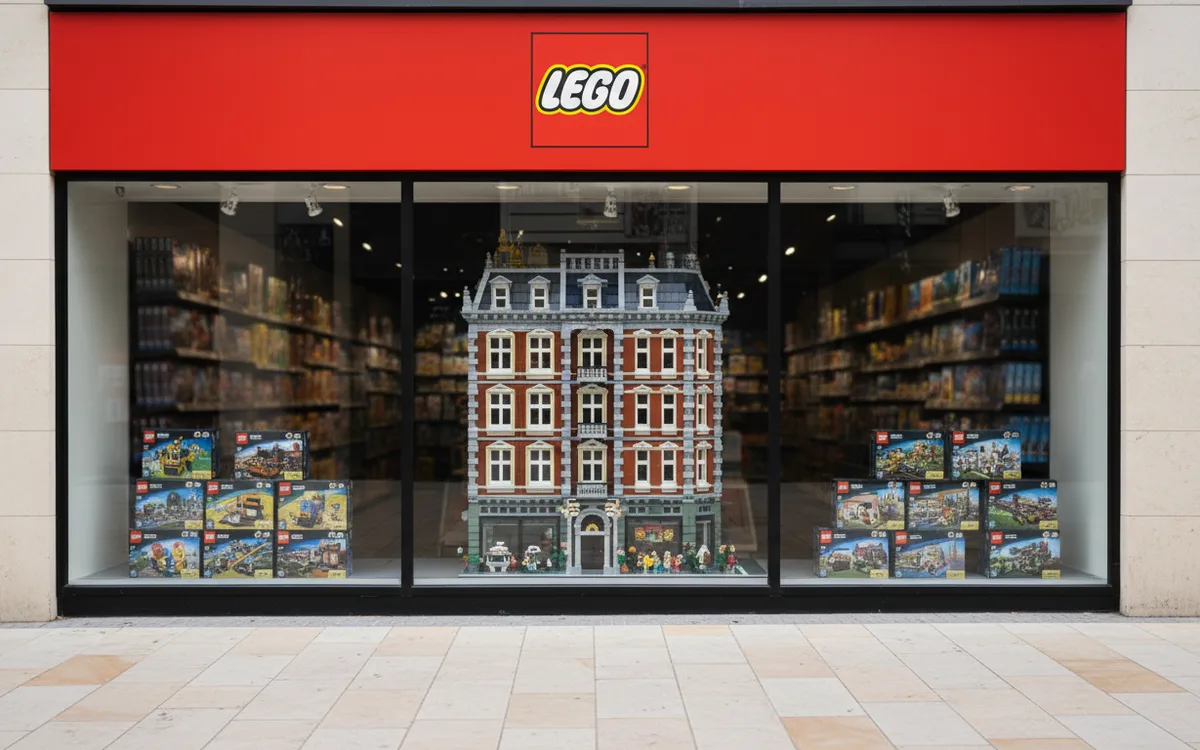
Lego uses both traditional and modern strategies to drive faster growth. Lego owns hundreds of retail stores globally that account for offline sales, while they also utilize digital channels to sell their products (Green, 2013). The Lego online store and digital marketing techniques account for successful sales through the internet. Lego uses online as well as offline sources for promotion and sales, which helps them keep up with technology while not losing their traditional customers. Lego also invites customers into product development: through its LEGO Ideas platform, fans submit set designs, the community votes on them, and a small number of the most supported designs are reviewed and put into production with the designer credited on the box. Strategies like these have helped Lego maintain a stronghold on the market and strengthen its brand awareness globally. Other strategies include:
Direct Export
Companies use this method when they have no means to establish infrastructure in other countries, so they export the manufactured product directly to those countries. Lego makes its bricks in a small number of its own plants and ships finished product from them: as of April 2025 it operated six factories, in Denmark, Hungary, Czechia, Mexico, China and Vietnam, with a seventh under construction in Virginia in the United States for opening in 2027 (The LEGO Group, 2025). Most of the 120-plus countries it sells in are therefore served by export from a regional plant, not by local production.
Franchising
During global expansion, the company name might not be established in the target country. Under such conditions, companies sometimes use franchising to sell their products under the name of an established company. Lego does not report franchising as an entry mode. Where a market is unfamiliar it has used a local distributor first, as it did in India; the sibling sample on Lego's distribution strategy covers that route.
Licensing
The process of licensing involves giving rights to firms or companies with a large market share in a market rather than competing with them. Licensing involves the production allowance of specific products and services only. Lego licenses in both directions. Its 2020 accounts show DKK 394 million of license income from console games, movies, mobile apps and other outbound licenses, under 1 percent of revenue (The LEGO Group, 2021c), and Merlin Entertainments runs the eleven Legoland resorts under a long-term license from the group (The LEGO Group, 2026b). It also licenses characters in: its Harry Potter sets are launched with Warner Bros. Consumer Products, which licenses the Wizarding World to toy makers (The LEGO Group, 2020).
Partnership
A partnership is an attractive option when both companies have expertise in different domains and can combine them to produce better products and create better opportunities. In 2020 Lego entered product partnerships with Adidas, IKEA and Levi's, brands it described as sharing its "passion for creativity and self-expression" (The LEGO Group, 2021c). Such partnerships are mutually beneficial.
Marketing Mix: The Three Ps
Lego has been consistent in its strategic planning of the marketing mix to penetrate markets. Marketing mixes refer to the strategies that companies use to promote their products or services in the market. A marketing mix helps businesses plan a successful product offering by analyzing their strengths, avoiding useless costs, executing effective marketing strategies, understanding the needs of customers, and planning when and how to promote the product (Lahtinen, 2020).
Product
The product is a commodity (like edibles, electronics, etc.) or a service (like security, transportation, etc.) that the company offers, and it is defined by its quality, brand, manufacturing, presentation, and price (Kotler and Armstrong, 2015). Van Waterschoot and Van den Bulte (1992) add the classification point that matters on a global brief: the four Ps are a taxonomy of marketing instruments rather than a ranking of them, so the product decision has to be read alongside the other three instead of on its own. How readily a product is then adopted in a particular culture depends on how far it fits what people there already do.
The products Lego offers have significantly changed over the past few years. From the typical brick sets, Lego has shifted to complex mechanized toys as well as online video games. Offering toys like the Mindstorms robotics sets, theme sets, car sets, and other such toys is setting Lego apart. Also, by partnering with film studios, Lego makes licensed theme sets: in 2023 LEGO Star Wars, LEGO Marvel and LEGO Harry Potter were among its top-performing themes, and it calls Disney "one of our longest-standing partners" (The LEGO Group, 2024). This way, Lego is increasing its domain and subsequently modernizing its products as well.
Price
The pricing strategy of the product determines the cost margin and the profits, and it is important to strategize this aspect keeping various cultural and economic factors in mind (Armstrong et al., 2019). Lego has a majority of its products for children and teenagers between the ages of 3 and 15. These products are aimed at middle-class and upper-class families. So, the products are not cheap and come at a cost. The products are designed and produced with high precision and quality and have a very long life.
Production and testing are vigorous processes that come at a cost to the company, which justifies the high pricing of the products. However, they are not very heavily priced, as they have to be affordable to most of the children and their families.
Promotion
Promotion refers to the strategies the company uses to communicate its products and services to the public. It also involves strategies to lure the customer to prefer the product over other similar products available on the market (Kotler and Armstrong, 2015). The strategies involved in the promotion can be marketing, advertisement, direct one-to-one marketing, other means of promotion, or all of these. Lego uses a variety of methods, ranging from innovative digital methods like social media marketing to traditional methods like television advertisements, for its promotion.
It has also partnered with many brands, like Warner Media, Disney, and Adidas, for joint promotions. The company has achieved strong brand awareness throughout the globe and remains a favorite of kids aged 3 to 15 years old. Its 2020 global brand campaign, Rebuild the World, was built on building and rebuilding and, the company says, "successfully attracted new builders to LEGO play" (The LEGO Group, 2021c). Recently, Lego entered into a partnership with film companies like Universal and Warner Bros. to increase its global brand awareness.
How Did Lego Perform in 2025?
Strongly, and faster than the toy market. For the 2025 financial year the LEGO Group reported revenue of DKK 83.5 billion, up 12% year on year, consumer sales up 16%, operating profit of DKK 22.0 billion, up 18%, and net profit of DKK 16.7 billion, up 21% (The LEGO Group, 2026a).
LEGO Group growth in 2025
Chart data
| Item | Value (%) |
|---|---|
| Net profit | 21% |
| Operating profit | 18% |
| Consumer sales | 16% |
| Revenue | 12% |
The LEGO Group in 2025
- Revenue, 2025
- DKK 83.5bn Up 12% on 2024.
- Operating profit, 2025
- DKK 22bn Up 18%.
- Net profit, 2025
- DKK 16.7bn Up 21%.
- Countries where products are sold
- over 120
- Factories
- 6 Denmark, Hungary, Czechia, Mexico, China, Vietnam.
Two things in those results bear on the analysis above. The company says it grew more than twice as fast as the toy market and took share, which supports the argument that brand strength and product range, not price, are doing the work. And it launched what it called its largest portfolio to date, "over 860 products, around half of which were new" (The LEGO Group, 2026a). Launched, not on sale, and it is a much wider portfolio than the brick-plus-theme-set picture described earlier in this sample. If you are writing your own Lego analysis, start from these figures rather than the 2020 ones used in the body.
How Could Lego Grow over the Next Five Years?
Lego could grow by opening Australia and higher-income African markets, re-pricing for Asian markets where its sets read as expensive, and widening the themed range so it appeals to girls as well as boys. It could also move more promotional spend to social channels and creators, and enter India and Southeast Asia through regional partners.
Markets
Lego sells across the Americas, Europe, the Middle East, Africa, and Asia Pacific. On its own 2025 reporting, growth was strongest in Western Europe, the Americas, and CEEMEA, and the group "gained market share, growing more than twice as fast as the toy market" (The LEGO Group, 2026a). The recommendation is to invest in Australia and in higher-income African markets, keeping regional demand and customer behavior in view before entering either.
Pricing Strategy
The Lego pricing strategy has been effective for Western and first-world countries. Lego targets kids from affluent families. However, in Eastern and Asian countries, the products appear more costly than the available toys on the market. The company should revise its products and pricing accordingly to penetrate markets in potential countries like Japan, China, Pakistan, and India. Of the four, only Pakistan and India have young populations: in 2025, 36% of people in Pakistan and 24% in India were under 15, against 15% in China and 11% in Japan (World Bank, 2026). In Pakistan and India the market potential lies in the number of children; in China and Japan the case rests on price and income, not demography. In all four, a pricing strategy fitted to local incomes is what turns that potential into sales.
Attracting Girls to the Product
The evidence for this recommendation is Lego's own research rather than a consumer split. In October 2021 the LEGO Group published a survey of 6,844 parents and children aged 6 to 14 across China, the Czech Republic, Japan, Poland, Russia, the UK, and the USA, run with the Geena Davis Institute on Gender in Media. It reported "59% of parents saying they encourage their sons to build with LEGO bricks compared to 48% who say they encourage it with their daughters", and the company committed to work with the Institute and UNICEF "to ensure LEGO products and marketing are accessible to all and free of gender bias and harmful stereotypes" (The LEGO Group, 2021b).
The survey is the right basis for the recommendation because it names the mechanism. The gap sits in what adults buy and encourage, not in what girls want to build, so the marketing decision is about who the campaign talks to as well as what is in the box. On the range itself, Lego's thematic sets lean on male superhero characters with fewer female equivalents, and several of the video games lean on combat themes. The recommendation is to widen the themed range and the characters in it, and to aim part of the promotion at the adult who is choosing the set. Lego's own 2021 commitment is the company saying the same thing.
Promotion Channels
Promotion through traditional methods is not enough for Lego. With global digitalization, children and their parents all over the world are using the internet regularly. Lego can utilize these channels apart from its digital marketing and promote its product through social marketing channels as well as through influencers and blog writers who influence potential customers.
Entering Markets Through Partnerships
This recommendation is not for China, which Lego has already built out: 91 of the 134 LEGO-branded stores it opened in 2020 were there (The LEGO Group, 2021a), and two of its six factories are in China and Vietnam (The LEGO Group, 2025). It is for India and the smaller Southeast Asian markets. In India Lego entered through a local distributor, and that is the route to extend: a regional retailer or distributor knows local shoppers, already has shelf space, and brings a name those shoppers trust, which a premium foreign brand lacks when it first arrives.
Related samples and pages:
- Lego's global marketing strategy and distribution, the sibling sample on international expansion.
- Marketing strategy of H&M, the same frameworks applied to fast fashion.
- Toyota's global strategy and competitive advantage, for a manufacturing comparison.
- Global marketing strategy for SMEs, if your brief is a smaller firm rather than a global brand.
- All MBA assignment samples and MBA assignment help.
About This Version
The report was written in 2021 on 2020 data; the 2025 results section and the figures cited to 2024, 2025 and 2026 sources are later additions. This page does not quote a regional revenue split, a global toy market share or a consumer gender split for Lego, and the girls recommendation is argued from the company's 2021 survey.
Need a marketing strategy analysis of a different brand, with the mix and market entry worked through? Message us on WhatsApp with your brief and deadline.
Sources
- Anon. (2021) 'Lego defies toy sector gloom as sales and profits rise', Financial Times. Available at: ft.com
- Armstrong, G., Kotler, P., Harker, M. and Brennan, R. (2019) Marketing: An Introduction, 4th edn. Harlow: Pearson UK.
- Brand Finance (2019) Lego's solid foundations stack up as world's most valuable toy brand (Brand Finance Toys 25 2019), 26 June. Available at: brandfinance.com
- Brand Finance (2020) World's top 25 most valuable toy brands could lose up to US$3 billion of brand value from Covid-19 (Brand Finance Toys 25 2020), 21 September. Available at: brandfinance.com
- Brickset (2022) Lego Mindstorms to be discontinued, 26 October. Available at: brickset.com
- Brand Credential (n.d.) The Effective Lego Marketing Strategy: Building Success Brick by Brick. Available at: brandcredential.com
- Green, K.A. (2013) 'Lego', in Global Marketing, 7th edn. Harlow: Pearson, p. 497.
- Kotler, P. and Armstrong, G. (2015) Principles of Marketing. Harlow: Pearson.
- Lahtinen, V., Dietrich, T. and Rundle-Thiele, S. (2020) 'Long live the marketing mix: testing the effectiveness of the commercial marketing mix in a social marketing context', Journal of Social Marketing.
- The LEGO Group (2020) New LEGO Harry Potter Wizarding World sets unveiled, 28 April. Available at: lego.com. Source for the range launched with Warner Bros. Consumer Products.
- The LEGO Group (2021a) 2020 Annual Results, 10 March. Available at: lego.com. Source for revenue of DKK 43.7 billion, net profit of DKK 9.9 billion and the 678 stores.
- The LEGO Group (2021b) Girls are ready to overcome gender norms but society continues to enforce biases that hamper their creative potential, 11 October. Available at: lego.com. Source for the survey of 6,844 parents and children, the 59% and 48% figures, and the commitment made with the Geena Davis Institute and UNICEF.
- The LEGO Group (2021c) Annual Report 2020. Billund: LEGO A/S. Available at: lego.com. Source for the product partnerships with adidas, IKEA and Levi's, the Rebuild the World campaign and license income of DKK 394 million.
- The LEGO Group (2024) Annual Report 2023, 12 March. Available at: lego.com. Source for the top-performing themes of 2023 and the description of Disney as a long-standing partner.
- The LEGO Group (2025) From Production to Play, 9 April. Available at: lego.com. Source for the six factories and the Virginia plant.
- The LEGO Group (2026a) The LEGO Group delivers record results in 2025, 10 March. Available at: lego.com
- The LEGO Group (2026b) The LEGO Group completes acquisition of LEGO Discovery Centres and LEGOLAND Discovery Centres from Merlin Entertainments, 27 February. Available at: lego.com. Source for the 29 Centres in nine countries and for Merlin's continued operation of eleven Legoland resorts under license.
- Merlin Entertainments (2025) The LEGO Group to acquire LEGO Discovery Centres and LEGOLAND Discovery Centres from Merlin Entertainments, 24 September. Available at: merlinentertainments.biz
- MBA Skool (n.d.) Lego Marketing Mix. Available at: mbaskool.com
- Pratap, A. (2019) Lego Marketing Mix, Notesmatic, June. The original page has been removed; archived copy available at: web.archive.org
- Simon, E.A. (2017) 'How digital remix and fan culture helped the Lego comeback', Transformative Works and Cultures.
- Triandis, H.C. (2007) 'Cultural aspects of globalization', Journal of International Management.
- Van Waterschoot, W. and Van den Bulte, C. (1992) 'The 4P classification of the marketing mix revisited', Journal of Marketing, 56(4), pp. 83-93. Available at: https://doi.org/10.1177/002224299205600407
- World Bank (2026) Population ages 0-14 (% of total population), World Development Indicators, 2025 values for Pakistan, India, China and Japan. Available at: data.worldbank.org (Accessed: 24 September 2026).
Frequently Asked Questions
What is Lego's marketing strategy?
Lego combines a consistent global brand with local adaptation. It runs its own retail stores and online store alongside traditional television and print advertising, licenses and co-brands with film and fashion partners, and invites customers to submit set designs. The product itself, the interlocking brick, has barely changed since it was patented in 1958.
Who is Lego's target market?
The core audience is children aged roughly 3 to 15, in middle and upper-income households, across the Americas, Europe, the Middle East, Africa and Asia Pacific. Complexity and price rise with age: simple sets for younger children, motorized and licensed sets for older children and adults. Video games reach a wider income range.
How does Lego enter new markets?
The sample sets out four modes: direct export, franchising, licensing and partnership. Lego's own reporting supports three of them. It ships from six factories in Denmark, Hungary, Czechia, Mexico, China and Vietnam, licenses its brand, and partners with firms such as Adidas and Levi's. It does not report franchising; in India it used a local distributor instead.
What are the three Ps in Lego's marketing mix?
This sample works through product, price and promotion. Product covers the shift from plain brick sets to motorized and licensed themes. Price covers premium positioning justified by durability and testing. Promotion covers the mix of social media, television advertising and joint campaigns with film and sportswear brands.
How much money does Lego make?
In 2025 the LEGO Group took DKK 83.5 billion in revenue, 12% more than in 2024, and kept DKK 16.7 billion as net profit after an operating profit of DKK 22.0 billion. The body of this sample uses 2020 figures, when revenue was DKK 43.7 billion, so revenue has nearly doubled since.