
Ryanair Financial Analysis 2026: PESTLE, Capital Structure, Dividend Policy and Ratios
This Ryanair financial analysis is a sample our team wrote to a corporate finance brief, refreshed to the 2026 Annual Report. It covers a dated PESTLE, the capital structure after the last bond was repaid in May 2026, the 25 percent dividend policy and buybacks, and FY2024 to FY2026 ratios with every input and formula shown.
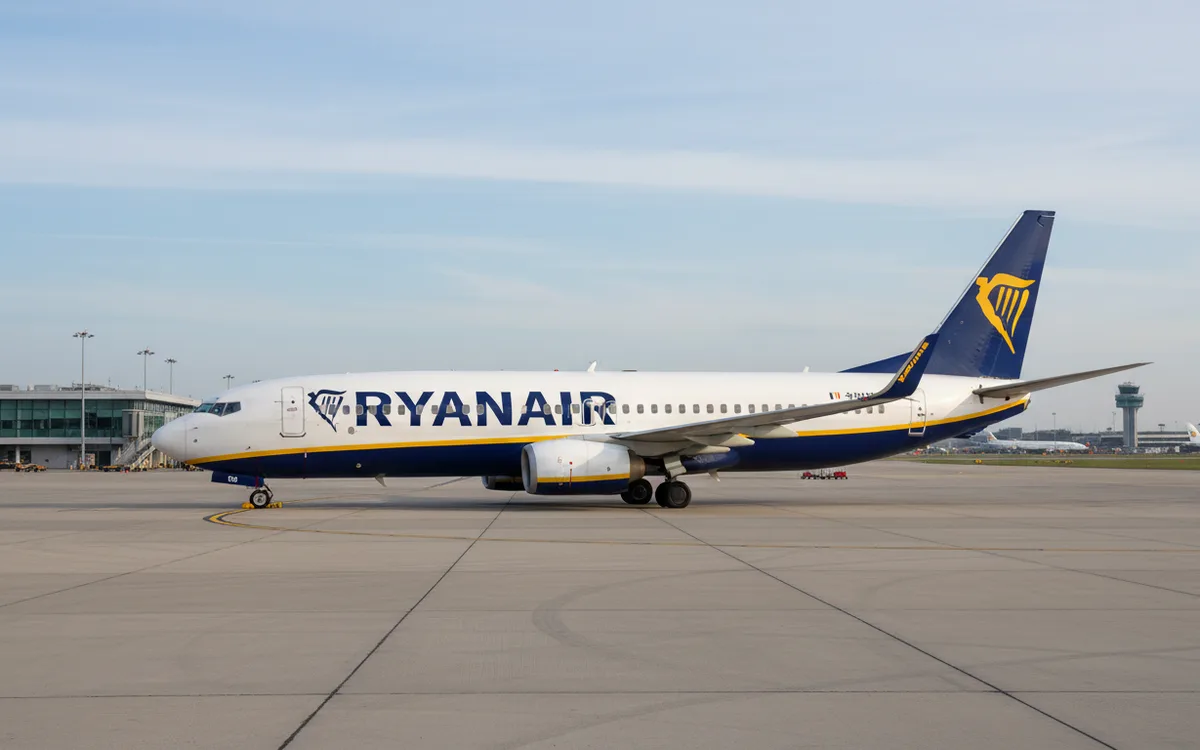
This Ryanair financial analysis is a sample written by our team to a corporate finance brief, refreshed to Ryanair Holdings plc's 2026 Annual Report for the year to 31 March 2026. Every "current" position is dated and checked against Ryanair's filings to 13 October 2026. Our guide to reading an annual report for a case study shows where each input lives and how to cite it.
What Did the Assignment Ask?
It asked for a financial analysis of Ryanair Holdings plc in three parts, with the second part split in two: the external environment and its effect on performance, the capital structure and the dividend policy, and the financial position measured by ratios. In our words:
- Part 1, external environment. Analyse the external factors acting on the company with a PESTLE and show how each one reaches its financial performance.
- Part 2a, capital structure. Explain how the company is financed between debt and equity.
- Part 2b, dividend policy. Explain the company's dividend policy.
- Part 3, financial position. Calculate and interpret profitability, liquidity, gearing, efficiency and investor ratios from the income statement and the statement of financial position.
Our team wrote the answer on the accounts to March 2024; we have refreshed it to FY2026, added a third year of ratios and rebuilt the PESTLE on Ryanair's own filings. More finance and strategy work is in our MBA assignment samples, and our MBA assignment help page explains how we take on a brief like this.
Part 1: How Does the External Environment Affect Ryanair's Financial Performance?
The external environment reaches Ryanair's accounts mostly through fuel. Fuel and oil cost €5,418.6m in FY2026, 41 percent of operating costs, and the Middle East conflict pushed spot jet fuel above $150 a barrel by May 2026. State charges, a €256m Italian fine and EU carbon taxes decide how much of a 10 percent fare rise reaches profit (Ryanair, 2026b).
PESTLE analysis of Ryanair at a glance, FY2026 and the first half of FY2027
Political
- Middle East conflict: spot jet fuel above $150 a barrel by May 2026; Q1 FY2027 profit down 34 percent
- State air traffic charges: route charges up 13 percent to €1,318.2m in FY2026
- Tax-led capacity: FY2027 growth moved to states and airports cutting aviation taxes
Economic
- Fuel, the largest cost: €5,418.6m, 41 percent of FY2026 operating costs
- Hedged fuel: 80 percent of FY2027 fuel hedged at about $67 a barrel
- Fare cycle: average fare up 10 percent in FY2026, down 6 percent in Q1 FY2027
Social
- Price-led demand: 208.4m passengers at a 94 percent load factor in FY2026
- Later bookings: a closer-in booking window cuts fare visibility
Technological
- Gamechanger fleet: all 210 delivered, 4 percent more seats and 16 percent less fuel
- MAX-10 order: 20 percent more seats, 20 percent less fuel; first 15 due spring 2027, certification pending
Environmental
- EU carbon costs: environmental taxes €1.1bn in FY2026, about €1.4bn expected in FY2027
- 50g CO2 target: per passenger-kilometre by 2031, a 27 percent reduction
Legal
- Italian competition fine: €256m, with €85m provided as an exceptional charge; under appeal
- Spanish consumer fine: about €107m, under appeal
We use PESTLE, the brief's spelling; the same six factors are often written PESTEL, and our guide to writing a PESTLE analysis sets out the method. The six sections below are the detailed PESTLE analysis of Ryanair: each factor is dated, sourced to a Ryanair filing, and tied to the line in the accounts where it shows up.
Political Factors: Conflict, State Charges and Taxes
Middle East conflict. The FY2026 results release of 18 May 2026 says "we still don't know when the Strait of Hormuz will reopen", and that spot jet fuel "spiked to over $150bbl" (Ryanair, 2026b). The first quarter of FY2027 shows the cost: profit after tax fell 34 percent to €538m as "the price of its 20% unhedged jet-fuel spiked and fares fell 6%" (Ryanair, 2026c).
State air traffic charges. Route charges, paid to state air navigation services, rose 13 percent to €1,318.2m in FY2026 "due to significantly higher Eurocontrol/ATC rates and a 4% increase in flight hours" (Ryanair, 2026b). That is about 10 percent of operating costs, at a price Ryanair cannot negotiate.
Tax-led capacity. Ryanair's scarce FY2027 growth goes to places such as Albania, Italy, Morocco, Slovakia and Sweden, and away from "uncompetitive high tax markets like Austria, Belgium, Germany and Regional Spain" (Ryanair, 2026b).
Economic Factors: Fuel, Hedging and Fares
Fuel, the largest cost. Fuel and oil cost €5,418.6m in FY2026, 41 percent of operating costs of €13,170.1m on our division. It rose 4 percent, no faster than flight hours (Ryanair, 2026a; 2026b).
Hedged fuel. The May release says "80% of FY27 jet-fuel is hedged at approx. $67bbl"; by July FY2028 was also 15 percent hedged, at about $85 a barrel (Ryanair, 2026b; 2026c). The hedge shows in equity: the cash-flow hedge reserve added €1,852.0m in FY2026 (Ryanair, 2026a). That gain is not profit: it unwinds as the fuel is burnt, and €1,008.6m reversed in the first quarter of FY2027 (Ryanair, 2026c).
Fare cycle. Scheduled revenue rose 14 percent to €10,556.0m in FY2026 on 4 percent more passengers and 10 percent higher fares, recovering "last year's 7% fare decline" (Ryanair, 2026b); in the first quarter of FY2027 fares fell 6 percent (Ryanair, 2026c). Aircraft and fuel are priced in dollars; FY2026 carried a €30.9m exchange loss (Ryanair, 2026a).
Social Factors: Price-Led Demand and Later Bookings
Price-led demand. Ryanair carried 208.4m passengers in FY2026 at a 94 percent load factor, from 200.2m (Ryanair, 2026b). Its stated approach is "load-active/yield passive": fill the aircraft and let the fare find its level. Ancillary revenue of €4,988.3m, about €24 a passenger, rises with every seat filled.
Later bookings. Both 2026 results releases say bookings are "closer-in" than a year earlier, and the July release links lower fares to "consumer hesitancy" over the conflict (Ryanair, 2026c). Less visibility is why Ryanair has given no FY2027 profit figure; on 2 September it said only that the group "is well placed to record another profitable year, albeit below FY26's record PAT" (Ryanair, 2026e).
Technological Factors: Fuel-Saving Aircraft
Gamechanger fleet. Ryanair took 34 Boeing 737-8200 "Gamechangers" in FY2026, completing 210 in a 647-aircraft fleet, each with "4% more seats, 16% less fuel & CO2" (Ryanair, 2026b). The accounts show the price. Capital expenditure was €1,892.4m and depreciation rose 13 percent to €1,373.4m (Ryanair, 2026a).
MAX-10 order. The 2023 order is for up to 300 Boeing 737 MAX-10s, 150 of them firm, with "20% less fuel & 20% more seats". At its AGM on 10 September 2026 Ryanair was planning for the first 15 in spring 2027, on Boeing's expectation of certification in late summer (Ryanair, 2026f). That date has slipped: on 28 September the FAA delayed certification over a flight-management software issue, and on 2 October it ruled that the fix need not come first; at 13 October 2026 the MAX-10 was not yet certified (Meier, 2026; Broderick, 2026). The annual report's fleet plan rises from 8 deliveries in FY2027 to 54 in FY2030, the capital expenditure Part 2a has to fund (Ryanair, 2026a).
Legal Factors: Competition and Consumer Fines
Italian competition fine. In December 2025 Italy's competition authority, the AGCM, found that Ryanair had abused a dominant position in its dealings with travel agents from April 2023 to April 2025 and fined it €256m. Ryanair has appealed and expects the appeals to take "up to three years" (Ryanair, 2026a). The €85m it provided, about a third, is the whole gap between reported profit after tax of €2,173.7m and the €2,258.7m "pre-exceptional" figure the release leads with (Ryanair, 2026b).
Spanish consumer fine. In November 2024 Spain's consumer affairs minister fined Ryanair about €107m and ordered it to drop its cabin baggage and some other customer policies; at the annual report date both were suspended pending Ryanair's appeal (Ryanair, 2026a). FY2025 carried a €54m provision for the fine (Ryanair, 2026b). Both provisions sit in the annual report's marketing, distribution and other line.
Environmental Factors: Carbon Costs
EU carbon costs. Environmental taxes, from the unwinding of free EU emissions allowances and the sustainable aviation fuel mandates in force since January 2025, "rose to €1.1BN in FY26" inside fuel and oil, and the release expects them to rise "by a further €300m this year to c.€1.4bn" (Ryanair, 2026b). That is about 7 percent of FY2026 revenue on our division, and it rises whatever oil does.
50g CO2 target. Ryanair targets 50 grams of CO2 per passenger-kilometre by 2031, a 27 percent reduction (Ryanair, 2026b). An aircraft that burns less fuel also needs fewer allowances, so the fleet spending cuts two cost lines at once.
Which External Factor Matters Most?
Fuel, through the political and economic cells together: it is the largest cost, its hedge moves equity by billions, and a price spike on the unhedged fifth, with fares 6 percent lower, cut first-quarter profit by a third. On 2 September 2026 Ryanair cut its FY2027 traffic target from 216m to 214m passengers "to reduce exposure to unhedged winter oil", a cut it expects to reduce winter losses by €70m to €100m (Ryanair, 2026e). Carbon taxes rank second because regulation is raising them, by a further €300m in FY2027; the fines rank third, large but one-off and under appeal.
Part 2a: What Is Ryanair's Capital Structure in 2026?
At 31 March 2026 Ryanair was financed mostly by equity. Shareholders' equity was €10,101.4m and borrowings €1,491.5m, of which €144.9m were leases, so gearing was 12.9 percent. Gross cash of €3,577.0m left net cash of €2,085.5m. After the last bond was repaid in May 2026, borrowings at 30 June were €181.9m (Ryanair, 2026a; 2026c).
Ryanair borrowings, shareholders' equity and net cash, March 2024 to June 2026
Chart data
| Point (bn EUR) | Borrowings incl. leases | Shareholders' equity | Net cash |
|---|---|---|---|
| Mar 2024 | 2.75 bn EUR | 7.61 bn EUR | 1.37 bn EUR |
| Mar 2025 | 2.68 bn EUR | 7.04 bn EUR | 1.3 bn EUR |
| Mar 2026 | 1.49 bn EUR | 10.1 bn EUR | 2.09 bn EUR |
| Jun 2026 | 0.18 bn EUR | 9.48 bn EUR | 2.65 bn EUR |
Year-end figures are from the annual report's balance sheet and notes 11 and 23; the June column is the unaudited first-quarter balance sheet.
| €m | 31 Mar 2024 | 31 Mar 2025 | 31 Mar 2026 | 30 Jun 2026 |
|---|---|---|---|---|
| Unsecured fixed-rate debt (Eurobonds; March 2024 includes €50.0m of other debt repaid in FY2025) | 2,092.2 | 2,044.7 | 1,198.8 | 0.0 |
| Floating-rate long-term debt (credit facility drawing at each March) | 490.0 | 488.9 | 147.8 | 38.3 |
| Lease liabilities | 164.6 | 149.1 | 144.9 | 143.6 |
| Total borrowings | 2,746.8 | 2,682.7 | 1,491.5 | 181.9 |
| Gross cash (cash, deposits over 3 months, restricted cash) | 4,119.6 | 3,986.5 | 3,577.0 | 2,834.7 |
| Net cash | 1,372.8 | 1,303.8 | 2,085.5 | 2,652.8 |
| Shareholders' equity | 7,614.2 | 7,036.9 | 10,101.4 | 9,480.5 |
| Gearing: borrowings ÷ (borrowings + equity) | 26.5% | 27.6% | 12.9% | 1.9% |
| Net debt ÷ equity (negative = net cash) | −18.0% | −18.5% | −20.6% | −28.0% |
Debt fell because €1,190.0m was repaid in FY2026: the €850m 2.875 percent Eurobond in September 2025 and, on our subtraction, about €340m of the revolving credit facility, which the annual report rounds to €0.4bn (Ryanair, 2026a). Equity rose €3,064.5m because profit of €2,173.7m and the €1,852.0m hedge gain outweighed €536.1m of buybacks (the equity statement's figure; the cash paid in the year was €536.5m) and €443.3m of dividends. At 31 March 2026, €1,830.7m of equity was the cash-flow hedge reserve; leave it out and equity is €8,270.7m and gearing 15.3 percent, the fairer measure.
Is Ryanair Debt-Free?
Not literally. The first-quarter release reports the "Final €1.2bn bond repaid in May, leaving the Group now debt free" (Ryanair, 2026c), and the annual report dates the repayment to 25 May 2026 (Ryanair, 2026a). But the 30 June 2026 balance sheet still shows €38.3m of floating-rate long-term debt and €143.6m of lease liabilities, against gross cash of €2,834.7m. The precise sentence is "Ryanair had no bonds outstanding and net cash of about €2.7bn at 30 June 2026", never "Ryanair has no debt".
Is the Capital Structure Right for Ryanair?
Yes, for now: an airline this exposed to fuel is safer with almost no debt. Modigliani and Miller showed that, without taxes or distress costs, the mix of debt and equity does not change a firm's value (Modigliani and Miller, 1958); Ryanair's departures from that world point the same way.
- The tax shield is small. The effective tax rate was about 10 percent in FY2026 (Ryanair, 2026b), so a euro of interest saves about ten cents of tax: the trade-off theory's main reason to borrow is weak here.
- Operating risk is high. A price spike on the unhedged fifth of fuel, with fares 6 percent lower, cut a quarter's profit by 34 percent; a business that volatile is safer without financial risk on top.
- Internal funds come first. The pecking order predicts retained cash before borrowing (Myers and Majluf, 1984), and Ryanair "expects to finance the aircraft under the 2023 Boeing Contract from internally generated cash flows" (Ryanair, 2026a). FY2026 operating cash inflow of €3,694.9m covered capital expenditure of €1,892.4m almost twice.
- Borrowing capacity is held in reserve. The 620 owned Boeing 737s are unencumbered, the rating is BBB+ from S&P and Fitch, and about €1bn of the revolving facility, which runs to March 2030, was undrawn at the year end (Ryanair, 2026a).
The cost is that equity is the dearer capital: the bond repaid in May carried a coupon of 0.875 percent. Low gearing protects the aircraft programme against a fuel shock, provided surplus cash goes back through buybacks rather than sitting idle.
Part 2b: What Is Ryanair's Dividend Policy?
Ryanair plans to pay about 25 percent of the previous year's profit after tax, adjusted for exceptional items, as an ordinary dividend in two parts: an interim in February and a final in September. Surplus cash can go back through buybacks or special dividends at the board's discretion, and since 2024 it has gone through buybacks (Ryanair, 2026a).
Cash Ryanair returned to shareholders, FY2024 to FY2026
Chart data
| Item | Value (m EUR) |
|---|---|
| Dividends paid, FY2024 | 199.5 m EUR |
| Buybacks, FY2024 | 0 m EUR |
| Dividends paid, FY2025 | 437.7 m EUR |
| Buybacks, FY2025 | 1,477.8 m EUR |
| Dividends paid, FY2026 | 443.3 m EUR |
| Buybacks, FY2026 | 536.5 m EUR |
The policy is recent. Ryanair paid its "maiden" ordinary dividend, €0.175 per share, in February 2024, and set the 25 percent rule "from fiscal year 2025 onwards" (Ryanair, 2024). Before that, cash went back mainly through buybacks, over 467m shares for almost €5bn between FY2008 and FY2021, with occasional special dividends. Since May 2024 three programmes have run back to back: €700m, €800m, and €750m, which was complete in the week of the AGM on 10 September 2026 (Ryanair, 2026a; 2026f).
The table measures the dividend as the policy defines it, against the previous year's earnings. Cash amounts are from the cash-flow statement, where each year's "dividends paid" is the previous year's final plus the current interim.
| Fiscal year | FY2024 | FY2025 | FY2026 |
|---|---|---|---|
| Interim dividend per share (paid in February) | €0.175 | €0.223 | €0.193 |
| Final dividend per share (paid the following September) | €0.178 | €0.227 | €0.195 |
| Ordinary dividend per share for the year | €0.353 | €0.450 | €0.388 |
| Basic EPS of the previous year | €1.1557 | €1.6828 | €1.4631 |
| Dividend per share ÷ previous year's EPS | 30.5% | 26.7% | 26.5% |
| Dividends paid in the year (€m) | 199.5 | 437.7 | 443.3 |
| Share buybacks in the year (€m) | 0.0 | 1,477.8 | 536.5 |
| Total returned (€m) | 199.5 | 1,915.5 | 979.8 |
| Free cash flow: operating cash inflow less capital expenditure (€m) | 766.0 | 1,863.2 | 1,802.5 |
| Total returned ÷ profit after tax | 10.4% | 118.9% | 45.1% |
| Total returned ÷ free cash flow | 26.0% | 102.8% | 54.4% |
The payout sits just above 25 percent of the previous year's earnings per share because buybacks shrink the share count between the year the profit is earned and the year the dividend is paid. FY2024 predates the formal policy. The FY2026 final of €0.195 was approved with 100 percent of votes at the AGM on 10 September 2026 and was payable on 17 September (Ryanair, 2026f; 2026d). The AGM update puts returns since 2008 at more than €10bn, with about 40 percent of the issued share capital bought back and cancelled.
How the Policy Fits Dividend Theory
Lintner found that managers set a target payout and move the dividend only part of the way towards it each year, so dividends are smooth and rarely cut (Lintner, 1956). Ryanair does the opposite: a fixed share of last year's profit moves with profit one year late, so the FY2026 dividend of €0.388 is 13.8 percent below FY2025's €0.450 because FY2025 profit fell. The smoothing happens in the buyback, which can be started, stretched or stopped without the signal a dividend cut sends.
Miller and Modigliani argued that in perfect markets the split between dividends and retained cash does not change value (Miller and Modigliani, 1961), so the question is the frictions, and a predictable dividend with a flexible buyback answers them.
The rule also tells you what comes next. It adjusts for exceptional items, so the €85m Italian provision does not reduce it: 25 percent of FY2026's pre-exceptional profit of €2,258.7m is about €565m for the FY2027 interim and final together, on our arithmetic. The board has not declared that figure; the H1 FY2027 results on 2 November 2026 should carry the interim (Ryanair, 2026h).
Part 3: What Do Ryanair's Ratios Show From FY2024 to FY2026?
They show a profitable, cash-rich airline whose headline ratios need an airline's reading. Operating margin recovered to 15.3 percent in FY2026 after 11.2 percent in FY2025, gearing fell to 12.9 percent with net cash of €2,085.5m, interest cover rose to 62.8 times, and the current ratio of 0.90 reflects €3.4bn of tickets sold in advance.
Ryanair headline ratios, FY2026 (year to 31 March 2026)
- Operating margin
- 15.27% 11.17% in FY2025
- Return on capital employed
- 21.25% 16.66% in FY2025
- Current ratio
- 0.90 1.50 without unearned revenue
- Gearing, borrowings to capital
- 12.87% 27.60% in FY2025
- Interest cover
- 62.8 times 23.4 times in FY2025
- Return on equity
- 21.52% 22.90% in FY2025
Every input comes from the consolidated statements in the 2026 Annual Report, which prints the three years side by side (Ryanair, 2026a). Balance-sheet ratios use year-end figures, not averages. Profit is the reported IFRS profit after tax, after the €85.0m exceptional charge in FY2026, with the pre-exceptional figure given where it changes the reading. Borrowings include lease liabilities.
| Input (€m unless stated) | Where it is | FY2024 | FY2025 | FY2026 |
|---|---|---|---|---|
| Revenue (total operating revenues) | Income statement | 13,443.8 | 13,948.5 | 15,544.3 |
| Operating profit | Income statement | 2,060.7 | 1,558.0 | 2,374.2 |
| Finance expense | Income statement, note 19 | 83.0 | 66.5 | 37.8 |
| Profit after tax | Income statement | 1,917.1 | 1,611.6 | 2,173.7 |
| Basic earnings per share (€) | Income statement, note 21 | 1.6828 | 1.4631 | 2.0594 |
| Total assets | Balance sheet | 17,175.6 | 17,507.0 | 19,747.7 |
| Current assets | Balance sheet | 5,827.1 | 6,009.7 | 7,744.9 |
| Inventories | Balance sheet | 6.2 | 4.6 | 4.8 |
| Trade receivables | Balance sheet | 76.4 | 73.5 | 44.2 |
| Gross cash | Balance sheet, note 23 | 4,119.6 | 3,986.5 | 3,577.0 |
| Current liabilities | Balance sheet | 6,400.6 | 8,152.8 | 8,572.8 |
| of which unearned revenue | Note 10 | 2,899.0 | 3,432.2 | 3,419.6 |
| Borrowings including leases | Note 23 | 2,746.8 | 2,682.7 | 1,491.5 |
| Shareholders' equity | Balance sheet | 7,614.2 | 7,036.9 | 10,101.4 |
| Capital employed: total assets less current liabilities | Our calculation | 10,775.0 | 9,354.2 | 11,174.9 |
| Ratio | Formula | FY2024 | FY2025 | FY2026 |
|---|---|---|---|---|
| Operating margin | Operating profit ÷ revenue × 100 | 15.33% | 11.17% | 15.27% |
| Net profit margin | Profit after tax ÷ revenue × 100 | 14.26% | 11.55% | 13.98% |
| Return on capital employed | Operating profit ÷ capital employed × 100 | 19.12% | 16.66% | 21.25% |
| Return on assets | Profit after tax ÷ total assets × 100 | 11.16% | 9.21% | 11.01% |
| Current ratio | Current assets ÷ current liabilities | 0.91 | 0.74 | 0.90 |
| Quick ratio | (Current assets − inventories) ÷ current liabilities | 0.91 | 0.74 | 0.90 |
| Cash ratio | Gross cash ÷ current liabilities | 0.64 | 0.49 | 0.42 |
| Gearing | Borrowings ÷ (borrowings + equity) × 100 | 26.51% | 27.60% | 12.87% |
| Debt to equity | Borrowings ÷ equity × 100 | 36.07% | 38.12% | 14.77% |
| Net debt to equity | (Borrowings − gross cash) ÷ equity × 100 | −18.03% | −18.53% | −20.65% |
| Interest cover | Operating profit ÷ finance expense | 24.8 times | 23.4 times | 62.8 times |
| Asset turnover | Revenue ÷ total assets | 0.78 | 0.80 | 0.79 |
| Receivable days | Trade receivables ÷ revenue × 365 | 2.1 | 1.9 | 1.0 |
| Return on equity | Profit after tax ÷ equity × 100 | 25.18% | 22.90% | 21.52% |
| Earnings per share, basic | As reported | €1.6828 | €1.4631 | €2.0594 |
| Ordinary dividend per share | Interim + final for the year | €0.353 | €0.450 | €0.388 |
Profitability Ratios
Fares explain both moves. In FY2025 fares fell 7 percent, so revenue rose only 3.75 percent while operating costs rose 8.85 percent, on our division, and operating margin dropped 4.16 percentage points to 11.17 percent. In FY2026 fares rose 10 percent, operating profit rose 52 percent to €2,374.2m and the margin returned to 15.27 percent, just below FY2024's 15.33; before the €85.0m exceptional charge it was 15.82 percent, the best of the three years (Ryanair, 2026b).
Ryanair profit after tax, FY2024 to FY2026
Chart data
| Item | Value (bn EUR) |
|---|---|
| FY2024 | 1.92 bn EUR |
| FY2025 | 1.61 bn EUR |
| FY2026 | 2.17 bn EUR |
The FY2025 net margin, 11.55 percent, was higher than the operating margin because finance and other income was €290.5m, mostly delivery-delay compensation and deposit interest; it fell to €117.8m in FY2026 (Ryanair, 2026a). Credit that margin to the airline's operations and you have missed where it came from. Return on capital employed tells the cleaner story: 19.12, 16.66, then 21.25 percent, as operating profit grew faster than the capital behind it.
Liquidity Ratios: Why Is the Current Ratio Below 1?
Because Ryanair is paid before it flies. Textbooks often give 1.5 to 2 as a comfortable current ratio, and Ryanair's was 0.91, 0.74 and 0.90. But current liabilities include unearned revenue of €2,899.0m, €3,432.2m and €3,419.6m: seats sold and not yet flown, settled by flying the passenger rather than by paying cash (Ryanair, 2026a, note 10). Take that out and the ratio is 1.66, 1.27 and 1.50.
Ryanair current ratio as reported and without unearned revenue, FY2024 to FY2026
Chart data
| Point | Current ratio as reported | Without unearned revenue |
|---|---|---|
| FY2024 | 0.91 | 1.66 |
| FY2025 | 0.74 | 1.27 |
| FY2026 | 0.9 | 1.5 |
The FY2025 dip is the €850m bond due in September 2025 moving into current liabilities (Ryanair, 2026a). In FY2026 the €1,198.8m bond due in May 2026 sat in current liabilities while €2,133.9m of fuel-hedge derivatives inflated current assets; without them the ratio would be 0.65. The quick ratio adds nothing, as inventories are €4.8m. Watch the cash ratio, 0.64 falling to 0.42: cash spent repaying debt and returning €979.8m to shareholders.
Gearing and Interest Cover
Gearing, borrowings including leases over borrowings plus equity, was 26.51, 27.60 and 12.87 percent, and Ryanair held net cash at every year end. Interest cover rose from 23.4 to 62.8 times in FY2026 as finance expense fell from €66.5m to €37.8m (Ryanair, 2026a). Repaying the 2.875 percent bond in September 2025 removed the dearest debt: the weighted rate on fixed-rate debt fell from 1.70 to 0.88 percent (note 11), so the saving came from a cheaper mix as well as a smaller balance.
Total liabilities over equity, 1.26, 1.49 and 0.95, is a different measure and should not be called gearing. Two thirds of FY2026 liabilities, €6,442.0m of €9,646.3m, are accruals, taxes owed and unearned revenue, none of which carries interest. "Net" gearing means cash has been deducted from interest-bearing debt, and on that definition Ryanair's is negative in all three years.
Efficiency Ratios
Asset turnover stayed near 0.8 times, which is what a capital-intensive airline looks like: property, plant and equipment, almost all aircraft, was €11,373.1m, 58 percent of total assets, at March 2026 (Ryanair, 2026a). Without the hedge derivatives, asset turnover rose from 0.80 to 0.89 on our division, in line with 11 percent more revenue from 34 more aircraft.
Receivable days fell from 2.1 to 1.0. Passengers pay at booking, so trade receivables of €44.2m say nothing about credit control, and a receivables turnover of 352 times means nothing for an airline; say so and move on.
Returns to Shareholders: ROE, EPS and Dividend Per Share
Return on equity fell from 25.18 to 22.90 to 21.52 percent while FY2026 profit rose 34.9 percent. DuPont shows why: ROE is net margin times asset turnover times the equity multiplier, 14.26 percent × 0.783 × 2.256 in FY2024, 11.55 percent × 0.797 × 2.488 in FY2025 and 13.98 percent × 0.787 × 1.955 in FY2026. Margin and turnover recovered; the multiplier fell because €1,852.0m of the €3,064.5m rise in equity was the hedge gain (Ryanair, 2026a). On equity without the hedge reserve, ROE was 26.1, 22.8 and 26.3 percent.
Basic earnings per share rose 40.8 percent to €2.0594, faster than profit, because buybacks cut the weighted average share count from 1,101.5m to 1,055.5m. On pre-exceptional profit, FY2026 ROE would be 22.36 percent; no trend above changes.
What Does the Analysis Mean for Ryanair?
It means Ryanair's financial risk now sits almost entirely in its operations, not its balance sheet. With the bonds repaid and net cash of about €2.7bn at 30 June 2026, the fuel price and the unhedged fifth of FY2027 fuel decide the next results, and Ryanair already expects FY2027 profit below FY2026's record (Ryanair, 2026e).
FY2025 showed what a fare fall does to margins; the first quarter of FY2027 shows what fuel and fares together do. With only 15 percent of FY2028 fuel hedged, at about $85 a barrel, FY2028 is where that risk widens. The AGM update lists the priorities as MAX-10 capital expenditure, rebuilding gross cash to €4bn and returning excess funds (Ryanair, 2026f). The H1 FY2027 results on 2 November 2026 are the next check.
State the limits in the answer itself. Year-end ratios can swing on one item, as the hedge shows; the June 2026 figures are unaudited; and Ryanair reports profit after tax by airline, so no ratio here splits by country or route. For a second worked example with DuPont, see our Godrej Properties financial analysis sample; for risk, return and the Sharpe ratio, our investment analysis assignment sample.
How a Marker Grades This
- Every ratio named with its formula, and every input traced to a statement line or note.
- Definitions that hold: gearing uses interest-bearing borrowings, with leases stated in or out, and "net" means cash has been deducted.
- The profit choice stated once, reported or pre-exceptional, and used consistently.
- An industry reading: an airline's current ratio below 1 and receivable days near zero explained, not marked down against a manufacturing benchmark.
- Ratio changes in percentage points: ROA moved from 9.21 to 11.01 percent, a rise of 1.80 points, not 1.80 percent.
- External factors, capital structure and dividends dated, sourced to the filings and tied to a statement line, ending with a dated position rather than "debt-free".
References here are Harvard with access dates, because Ryanair publishes every month; use the style your module names.
Need a financial analysis, ratio analysis or capital-structure assignment on Ryanair or another listed company? Message us on WhatsApp with the company, your brief, the word count and the deadline.
Sources
- Ryanair Holdings plc (2026a) Annual Report 2026. Year ended 31 March 2026, financial statements approved 19 June 2026. investor.ryanair.com (PDF) (accessed 13 October 2026). Source for the three-year income statement, balance sheet and cash-flow statement, notes 10, 11, 19, 21, 23 and 24, the dividend policy and buyback history, the borrowings and facility description, the fleet plan, the AGCM and Spanish proceedings, and the repayment of the last bond on 25 May 2026.
- Ryanair Holdings plc (2026b) Ryanair 2025-26 PAT rises 40% to €2.26bn (pre-except.). FY26 results release, 18 May 2026. investor.ryanair.com (PDF) (accessed 13 October 2026). Source for the chief executive's statement, hedging, fares, passengers, capacity allocation, cost-line explanations, environmental taxes, the exceptional charge, the tax rate, revenue by country of departure and the going-concern factors.
- Ryanair Holdings plc (2026c) Ryanair Q1 PAT falls 34% to €538m as unhedged oil prices spike. Q1 FY27 results release, 20 July 2026, unaudited. investor.ryanair.com (PDF) (accessed 13 October 2026). Source for first-quarter profit, fares, fuel cost, hedging into FY2028, the 30 June 2026 balance sheet, net cash and the hedge-reserve reversal.
- Ryanair Holdings plc (2026d) Final dividend for FY26. Regulatory announcement, 23 July 2026. investegate.co.uk (accessed 13 October 2026). Source for the €0.195 final dividend and its payment date of 17 September 2026.
- Ryanair Holdings plc (2026e) Ryanair's Aug. traffic grows 6% to 22.2m; FY27 traffic cut from 216m to 214m to reduce exposure to unhedged winter oil. 2 September 2026. corporate.ryanair.com (accessed 13 October 2026).
- Ryanair Holdings plc (2026f) AGM: Update. Presentation and proxy results, annual general meeting of 10 September 2026. investor.ryanair.com (PDF) (accessed 13 October 2026). Source for the vote on the final dividend, the completion of the €750m buyback, cumulative returns since 2008, the 214m traffic target, the MAX-10 delivery plan and the capital priorities.
- Ryanair Holdings plc (2026g) Ryanair September traffic grows 4% to over 20.1m guests. 2 October 2026. corporate.ryanair.com (accessed 13 October 2026).
- Ryanair Holdings plc (2026h) Investor relations, financial calendar: H1 FY27 results, 2 November 2026. investor.ryanair.com (accessed 13 October 2026).
- Ryanair Holdings plc (2024) Annual Report 2024. Year ended 31 March 2024. investor.ryanair.com (PDF) (accessed 13 October 2026). Source for the maiden dividend, the start of the 25 percent policy, the FY2023 earnings per share and the buyback history to FY2021.
- Meier, R. (2026) 'FAA delays Boeing 737 MAX 10 certification over software issue', Air Data News, 28 September. airdatanews.com (accessed 13 October 2026).
- Broderick, S. (2026) 'FAA says software issue will not stop Boeing 737-10 certification', Aviation Week, 3 October. aviationweek.com (accessed 13 October 2026).
- Lintner, J. (1956) 'Distribution of incomes of corporations among dividends, retained earnings, and taxes', American Economic Review, 46(2), pp. 97-113. JSTOR (accessed 13 October 2026).
- Miller, M.H. and Modigliani, F. (1961) 'Dividend policy, growth, and the valuation of shares', Journal of Business, 34(4), pp. 411-433. doi.org/10.1086/294442 (accessed 13 October 2026).
- Modigliani, F. and Miller, M.H. (1958) 'The cost of capital, corporation finance and the theory of investment', American Economic Review, 48(3), pp. 261-297. American Economic Association (PDF) (accessed 13 October 2026).
- Myers, S.C. and Majluf, N.S. (1984) 'Corporate financing and investment decisions when firms have information that investors do not have', Journal of Financial Economics, 13(2), pp. 187-221. doi.org/10.1016/0304-405X(84)90023-0 (accessed 13 October 2026).
Documents checked for currency on 13 October 2026: every Ryanair results release, traffic release and shareholder announcement after the annual report, namely the Q1 FY27 results of 20 July 2026, the final dividend notice of 23 July, the August traffic release of 2 September with its cut to the FY2027 traffic target, the AGM update of 10 September and the September traffic release of 2 October 2026, which reports 20.1m passengers at a 94 percent load factor and changes no figure above, and the FAA's 28 September and 2 October 2026 decisions on MAX-10 certification. The next documents due are the October traffic release in early November and the H1 FY2027 results on 2 November 2026, which will overtake every "30 June 2026" figure and should carry the FY2027 interim dividend; this page is refreshed then.
Frequently Asked Questions
Is Ryanair debt-free?
Not in the literal sense. Ryanair repaid its last bond, €1.2bn, in May 2026 and now calls the group debt free, but its 30 June 2026 balance sheet still carried €38.3m of long-term debt and €143.6m of lease liabilities. Against gross cash of about €2.8bn that leaves net cash of about €2.7bn. Part 2a sets out the table.
Does Ryanair pay a dividend?
Yes. Since the financial year to March 2025 Ryanair has paid about 25 percent of the previous year's profit after tax, adjusted for exceptional items, as an interim dividend in February and a final in September. For FY2026 that was €0.193 and €0.195 per share; the final was approved at the AGM on 10 September 2026. Part 2b shows the payments and buybacks year by year.
Why is Ryanair's current ratio below 1?
Because passengers pay when they book. At 31 March 2026 current liabilities of €8,572.8m included €3,419.6m of unearned revenue, seats sold but not yet flown, which Ryanair settles by flying rather than paying cash. Leave that out and the current ratio is 1.50 instead of 0.90. The liquidity section of Part 3 gives all three years and the chart.
Should a Ryanair ratio analysis use profit before or after the exceptional item?
Use the reported IFRS profit, €2,173.7m for FY2026, because it ties to the audited statements and to earnings per share, and say so. Then show the pre-exceptional €2,258.7m where it changes the reading, since the €85m provision for the Italian fine is under appeal and Ryanair's dividend policy itself uses the adjusted figure. Part 3 shows both margins.
Why did Ryanair's return on equity fall in FY2026 when profit rose 35 percent?
Because equity rose faster than profit, and most of that rise was an accounting gain on fuel hedges. The cash-flow hedge reserve added €1,852.0m to equity in FY2026. Measured on equity without the hedge reserve, ROE rose from 22.8 to 26.3 percent. The DuPont split in Part 3 shows the fall came from the equity multiplier, not from margins.